
Driving Sustainable Agriculture and Agribusiness Growth
The third pillar positions AFAB-HUB as a development, knowledge, and innovation platform operating at the intersection of agribusiness, research, and sustainable development. While the first two pillars focus on commercial agribusiness operations and agricultural ecosystem services, this pillar ensures that AFAB-HUB contributes to broader development outcomes by generating knowledge, strengthening institutional capacity, and advancing inclusive agricultural transformation.
Through this pillar, AFAB-HUB collaborates with governments, development agencies, research institutions, financial institutions, private sector actors, and farmer organizations to design and implement programs that strengthen food systems, enhance agricultural productivity, and expand economic opportunities for farmers and rural communities.
The pillar serves as a bridge between practical agribusiness operations and development practice, enabling the organization to translate lessons from field operations into scalable solutions that address systemic challenges within agricultural value chains. AFAB-HUB contributes to evidence-based approaches that improve agricultural policies, programs, and investment strategies by integrating research, innovation, and program implementation.
A key focus of this pillar is the generation and application of knowledge that supports the modernization of agricultural systems. Through research, market studies, and value chain analysis, AFAB-HUB identifies opportunities to improve productivity, reduce inefficiencies, and strengthen the competitiveness of agricultural enterprises. These insights inform both the organization’s internal operations and broader sectoral initiatives aimed at strengthening food systems.
The pillar also promotes capacity development and entrepreneurship by supporting farmers, youth, and women with training, mentorship, and agribusiness incubation opportunities. Through targeted programs, AFAB-HUB helps emerging agripreneurs develop viable enterprises, access markets, and adopt innovative production and business models that enhance profitability and sustainability.
Another important dimension of this pillar is the implementation of development programs that address cross-cutting challenges affecting agricultural communities. These programs may focus on food security, climate resilience, rural livelihoods, value chain development, and inclusive economic participation. By working closely with development partners and local stakeholders, AFAB-HUB helps design and implement initiatives that strengthen agricultural systems while improving the wellbeing of farming communities.
In addition, the pillar supports the development of robust monitoring, evaluation, and learning (MEL) systems that track progress, measure outcomes, and generate insights that inform continuous improvement. Through impact evaluations, performance assessments, and knowledge-sharing initiatives, AFAB-HUB contributes to the broader evidence base that supports effective agricultural development interventions.
The pillar also engages in policy dialogue and knowledge dissemination, sharing research findings, best practices, and field-based lessons with policymakers, development institutions, and sector stakeholders. This engagement helps strengthen evidence-based decision-making and contributes to the formulation of policies that support sustainable agricultural transformation.
Looking ahead, AFAB-HUB aims to expand this pillar through the development of dedicated platforms for research, training, and innovation, including the establishment of specialized knowledge and capacity-building initiatives that support agribusiness development, workforce training, and technology adoption within the agricultural sector.
Under the Development, Research and Innovation pillar, AFAB-HUB implements a range of strategic initiatives designed to strengthen agricultural ecosystems, promote entrepreneurship, and generate knowledge that informs sustainable food systems development. These focus areas combine practical field interventions with research and capacity development to support farmers, agripreneurs, and agribusiness enterprises across the agricultural value chain.
AFAB-HUB promotes agricultural entrepreneurship by supporting the emergence and growth of agribusiness enterprises across production, processing, input supply, and food systems services. Through structured incubation programs, mentorship, and enterprise development support, the Hub equips aspiring and existing agripreneurs with the knowledge, tools, and networks required to establish and scale sustainable agricultural businesses.
These initiatives focus particularly on empowering youth and women to participate meaningfully in agribusiness value chains by providing business development training, market insights, and technical guidance on enterprise management. By fostering a new generation of agripreneurs, AFAB-HUB contributes to job creation, innovation, and the expansion of competitive agricultural enterprises.
AFAB-HUB provides targeted training programs designed to strengthen farmers’ technical skills, productivity, and market competitiveness. Through farmer field schools, demonstration farms, workshops, and extension services, the Hub equips farmers with practical knowledge on modern farming practices, climate-smart agriculture, soil fertility management, post-harvest handling, and agribusiness management.
These capacity-building initiatives help farmers improve yields, reduce production risks, and adopt sustainable agricultural practices that enhance long-term productivity and environmental stewardship. By strengthening farmers’ knowledge and skills, AFAB-HUB also helps rural communities transition from subsistence farming to more market-oriented agricultural systems.
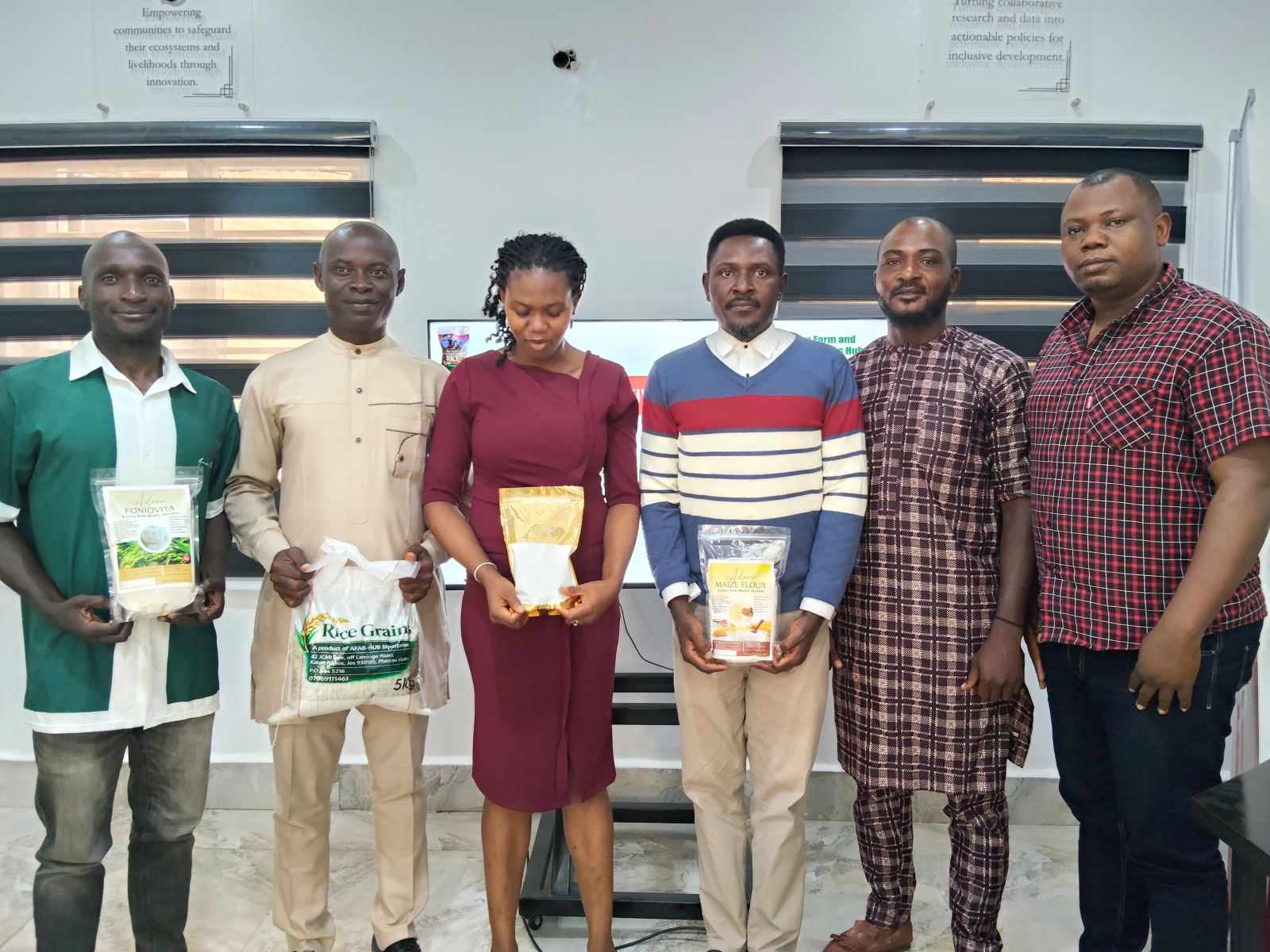
Recognizing the growing importance of food processing and value addition, AFAB-HUB supports the development of food entrepreneurs (foodprenuers) who engage in the transformation of agricultural commodities into market-ready food products. The Hub provides training programs that cover food processing techniques, product development, quality control, packaging, branding, food safety standards, and market entry strategies. These programs aim to help small-scale processors and emerging food businesses improve product quality, access new markets, and develop competitive food brands. AFAB-HUB contributes to expanding local food industries, reducing post-harvest losses, and creating additional value within agricultural supply chains by strengthening the capabilities of food entrepreneurs,.
AFAB-HUB conducts a range of assessments and analytical studies that provide insights into agricultural markets, value chains, and food systems dynamics. These studies support evidence-based decision-making for agribusiness investments, development programs, and policy initiatives. Key assessment activities include:
These studies help identify opportunities for value addition, market expansion, and enterprise development while informing strategies that strengthen agricultural competitiveness and sustainability.
AFAB-HUB works with partners to design and implement innovative models that improve the functioning of agricultural market systems. These models aim to address systemic challenges such as weak market linkages, limited access to finance, fragmented supply chains, and inadequate processing infrastructure.
Through research, pilot projects, and collaborative partnerships, the Hub develops scalable approaches for strengthening agricultural ecosystems. This includes designing integrated value chain models, farmer aggregation systems, processing clusters, and market linkage mechanisms that improve efficiency and participation across the agricultural economy.
These models are tested through pilot initiatives and refined through learning processes before being scaled in collaboration with development partners and private sector actors.
A cross-cutting component of this pillar is the generation and dissemination of knowledge that supports agricultural development and innovation. AFAB-HUB documents lessons from field interventions, research studies, and program implementation to inform continuous learning and sector-wide improvement.
The Hub contributes to strengthening evidence-based decision-making within agricultural development initiatives and food systems transformation efforts through publications, learning events, training programs, and policy dialogue,.